
Start with the right question
People often ask which payment method is private. A better question is: private from whom? Your bank, the merchant, a payment processor, a family member who reads your statement and a passer-by who sees your screen all see different things. Each method shifts information between these parties rather than making it disappear.
Here is a plain comparison, based on how these methods generally work.
Method by method
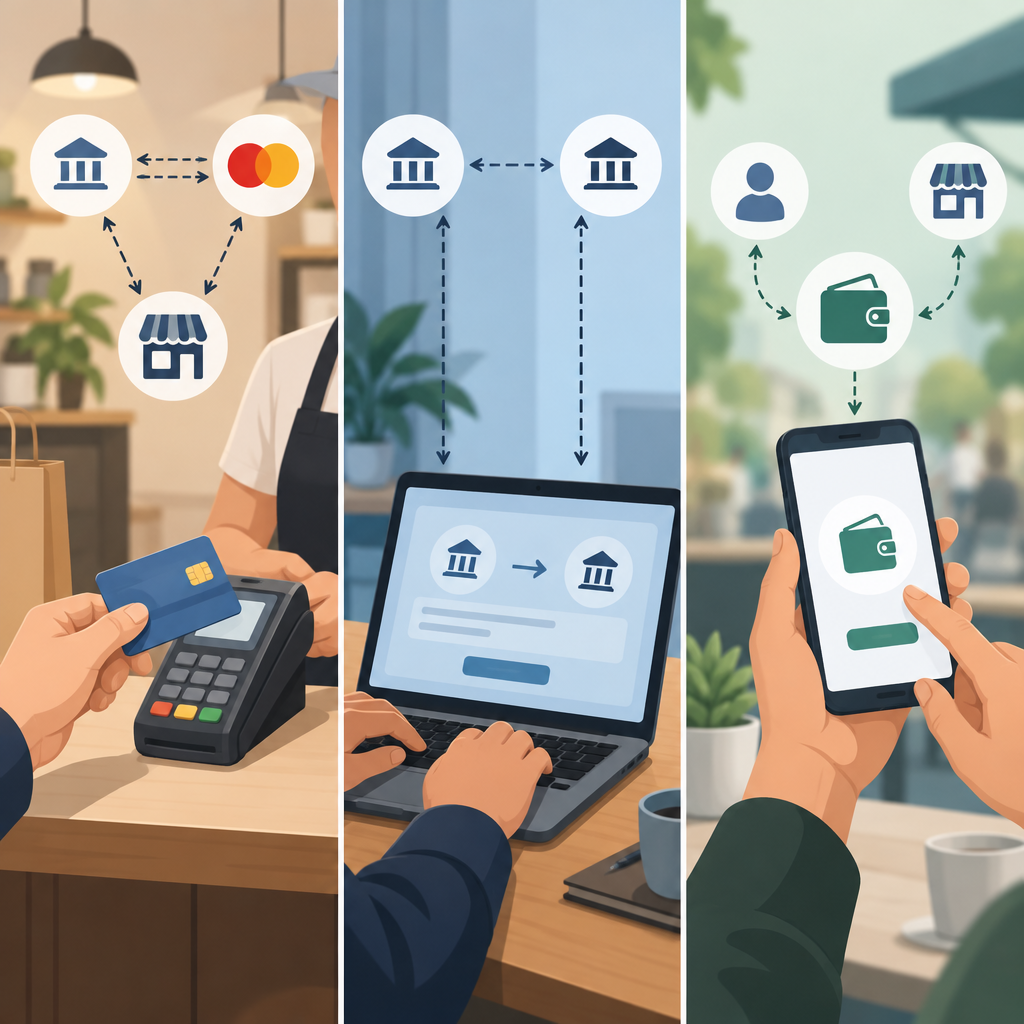
- Debit and credit cards: your bank and the card network see the merchant, the amount and the time. The merchant sees your name and card details. Strong fraud protection, little privacy.
- Bank transfers: both banks see both parties. Transfers are usually slower, and the recipient often learns your full name and account details.
- E-wallets: the wallet provider sits in the middle, so the merchant may see less about your bank, but the provider sees everything you do through it.
- Prepaid vouchers: a voucher bought with cash can keep your bank out of the picture, but the merchant will still know who you are if the service requires an account.
- Cryptocurrency: often described as anonymous, but on most networks every transaction is recorded on a public ledger. Once an address is linked to you, for example through an exchange that verified your identity, your history can be traced.
When identity checks override everything
Some services must know who you are no matter how you pay. Licensed online casinos are a clear example: they verify age and identity before paying out, so the payment method changes who else sees the activity, not whether the operator knows you. Readers in Iceland, where players use online sites licensed abroad, often compare greiðsluleiðir spilavíti (casino payment methods) to see which options suit them and how withdrawals work. If you play, it is 18+ only, set a budget first, and remember that help is available in Iceland through the Red Cross helpline 1717, free and open around the clock.
The privacy lesson carries over to any regulated service, from banks to brokers: you can limit how widely your data travels, not whether the provider holds it.
A sensible default
For most people, a balanced setup looks like this. Use one main card for everyday shopping, with instant notifications switched on. Keep a separate card or wallet for subscriptions and online entertainment, so a single leak does not expose everything. Delete stored card details from services you have stopped using. And treat any method that promises total anonymity with suspicion, especially if it comes with pressure to move quickly. Real privacy is quieter than that: fewer copies of your data, held by fewer companies, for less time.